Biblical Hebrew for Beginners
Learn the sacred language of Scripture. Read the Word in its original form and discover deeper meaning.
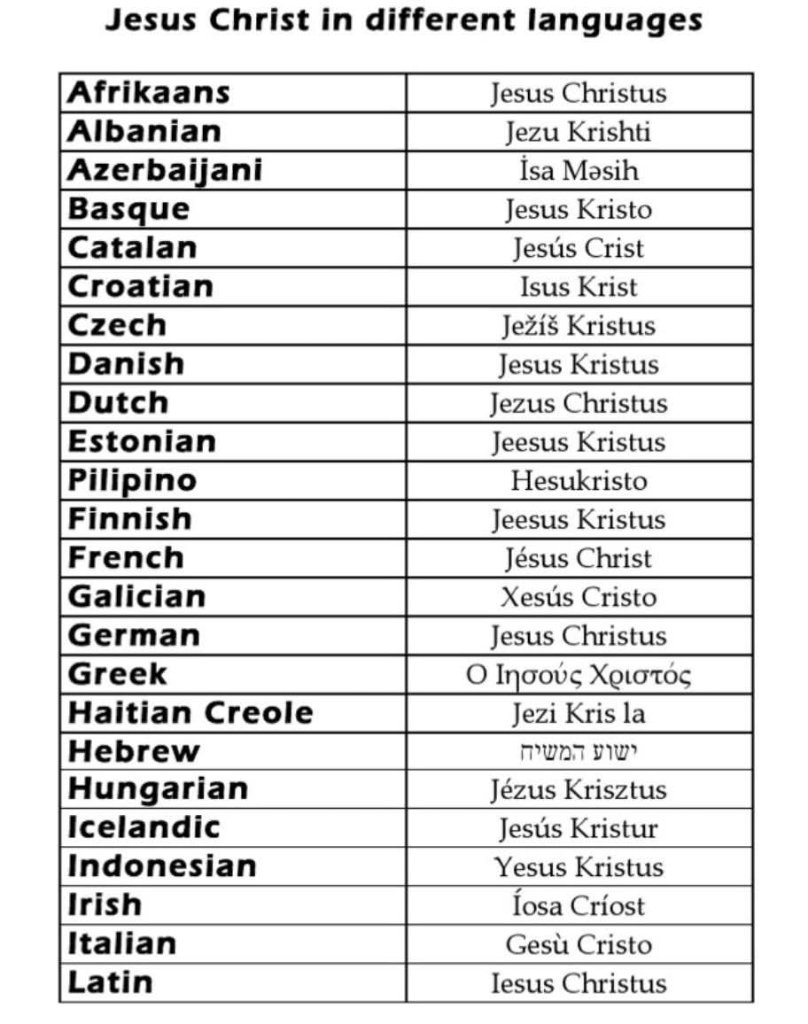
Yahusha HaMashiach (Jesus Christ) in Different Languages
The name of the Messiah transliterated across world languages - all pointing to the same Savior!
"Therefore God exalted him to the highest place and gave him the name that is above every name, that at the name of Jesus every knee should bow, in heaven and on earth and under the earth."
— Philippians 2:9-10
Why Learn Biblical Hebrew?
Biblical Hebrew is the original language of most of the Old Testament. Learning it allows you to:
- Read Scripture in its original form without translation bias
- Discover word plays and meanings lost in translation
- Connect more deeply with the ancient people of God
- Understand the sacred names like Yahuah (יהוה) and Yahusha HaMashiach (יהושע המשיח)
- Pronounce and use the true names of the Father and Son in prayer and worship
Today's Hebrew Lesson: The Sacred Names
Yahuah
The personal, covenant name of the Almighty revealed to Moses at the burning bush (Exodus 3:14-15). This is His memorial name forever—the name by which He desires to be known and called upon. It means "I AM" or "He who exists eternally." Names matter to Yahuah—He knows you by name, and we honor Him by using His.
Yahusha HaMashiach
The Son of God, whose name literally means "Yahuah is Salvation." HaMashiach means "the Messiah" or "the Anointed One." His name reveals His mission: to save His people from their sins (Matthew 1:21). Also known as Jesus Christ in English. When you call upon His true name, you connect with the authentic identity of the Creator and His Son.
🤔 Reflection Question:
How does knowing the true names of the Father and Son deepen your relationship with them?
🙏 Today's Prayer:
"Yahuah, I praise Your holy name. Thank You for revealing Yourself and sending Yahusha HaMashiach (Jesus Christ) to redeem me. Help me honor You in all I do and share the truth of Your name with others. In Yahusha's (Jesus') name, Amen."
"And there is no other name under heaven given among men by which we must be saved." — Acts 4:12
The Hebrew Alphabet (Aleph-Bet)
Hebrew is read from right to left. Click each letter to learn more about it.
Essential Biblical Words
Master these foundational words that appear throughout Scripture. Check them off as you learn!
Yahuah
The personal covenant name of God
Yahusha HaMashiach (Jesus Christ)
Yahuah is Salvation, the Messiah
Shalom
Peace/Hello/Goodbye
Elohim
God/Mighty One
Amen
So be it/Truth
Hallelujah
Praise Yah
Torah
Law/Teaching/Instruction
Ahavah
Love
Chesed
Lovingkindness/Mercy
Melech
King
Navi
Prophet
Kohen
Priest
Berachah
Blessing
Tefillah
Prayer
Kadosh
Holy/Set Apart
Tsedek
Righteousness/Justice
Ruach
Spirit/Wind/Breath
Emet
Truth
Chayim
Life
Shamayim
Heaven/Sky
0 / 20 Words Learned
Famous Biblical Phrases
Recognize these iconic verses in their original Hebrew.
Bereshit bara Elohim
"In the beginning God created"
Genesis 1:1
Shema Yisrael Yahuah Eloheinu Yahuah Echad
"Hear, O Israel: Yahuah our God, Yahuah is One"
Deuteronomy 6:4
Yahuah Ro'i
"Yahuah is my shepherd"
Psalm 23:1
Anochi Yahuah Elohecha
"I am Yahuah your God"
Exodus 20:2
Yahusha HaMashiach (Jesus Christ) Adon
"Yahusha the Messiah (Jesus Christ) is Lord"
Philippians 2:11
Ehyeh Asher Ehyeh
"I AM WHO I AM"
Exodus 3:14
📚 Progressive Learning Path
Master biblical Hebrew step by step with structured lessons
Level 1: Beginner Lessons
Vowel Points (Nikud)
Hebrew vowels are marks under or above letters. The vowel 'ah' (kamatz) looks like a T under a letter: בָּ. The vowel 'eh' (segol) has three dots: בֶּ. The vowel 'ee' (chirik) is a dot below: בִּ. The vowel 'oh' (cholam) is a dot above: בֹ. The vowel 'oo' (shuruk) is a dot in the vav: וּ.
Examples:
Baruch
Blessed
Davar
Word
Definite Article (The)
In Hebrew, 'the' is ה (hay) with a vowel attached to the beginning of a word. 'Book' is סֵפֶר (sefer), but 'THE book' is הַסֵּפֶר (ha-sefer). Notice the dagesh (dot) in the next letter.
Examples:
Ha-yom
The day
Ha-adam
The man
Basic Verbs - Past Tense
Hebrew verbs change based on who is doing the action. 'He wrote' is כָּתַב (katav). 'She wrote' is כָּתְבָה (katva). 'I wrote' is כָּתַבְתִּי (katavti).
Examples:
Amar
He said
Halach
He walked
Your Learning Progress
Level 1: Beginner
0 of 3 lessons
Level 2: Intermediate
0 of 3 lessons
Level 3: Advanced
0 of 4 lessons
Start your Hebrew learning journey today! 🚀
The 7 Hebrew Holy Days (Feasts of Yahuah)
These are God's appointed times—sacred festivals commanded in Leviticus 23. They reveal the plan of salvation through Yahusha HaMashiach.
1. Passover (Pesach)
Celebrates Israel's deliverance from Egypt when the angel of death "passed over" homes marked with lamb's blood.
Prophetic Fulfillment:
Yahusha (Jesus) is the Passover Lamb—His blood saves us from death and sin (1 Cor 5:7)
Leviticus 23:5 | Spring (March-April)
2. Unleavened Bread (Chag HaMatzot)
7-day feast eating bread without yeast, symbolizing putting away sin and living pure lives.
Prophetic Fulfillment:
Yahusha's (Jesus') sinless life—He is the Bread of Life without the leaven of sin
Leviticus 23:6-8 | Spring (March-April)
3. First Fruits (Yom HaBikkurim)
Bringing the first portion of the barley harvest as an offering to God, celebrating new life.
Prophetic Fulfillment:
Yahusha's (Jesus') resurrection—He is the first fruits of the dead (1 Cor 15:20)
Leviticus 23:9-14 | Spring (March-April)
4. Pentecost / Weeks (Shavuot)
Celebrated 50 days after First Fruits. Commemorates God giving the Torah at Mount Sinai.
Prophetic Fulfillment:
The Holy Spirit poured out on believers—God's law written on our hearts (Acts 2)
Leviticus 23:15-22 | Late Spring (May-June)
5. Trumpets (Yom Teruah)
Day of blowing the shofar (ram's horn), a wake-up call to prepare for the Day of Atonement.
Prophetic Fulfillment:
The rapture/return of Yahusha (Jesus)—the trumpet will sound! (1 Thess 4:16-17)
Leviticus 23:23-25 | Fall (September)
6. Day of Atonement (Yom Kippur)
The holiest day—fasting, repentance, and seeking God's forgiveness. The High Priest entered the Holy of Holies.
Prophetic Fulfillment:
Yahusha's (Jesus') sacrifice—our eternal atonement and forgiveness (Hebrews 9:12)
Leviticus 23:26-32 | Fall (September)
7. Tabernacles (Sukkot)
7-day feast living in temporary booths, remembering Israel's wilderness journey and God's provision.
Prophetic Fulfillment:
Yahusha (Jesus) dwelling among us & His millennial reign—God tabernacling with mankind (Rev 21:3)
Leviticus 23:33-44 | Fall (September-October)
Why These Feasts Matter
✓They are God's appointed times, not Jewish holidays—they belong to all believers
✓Yahusha (Jesus) fulfilled the first 4 feasts at His first coming (Passover, Unleavened Bread, First Fruits, Pentecost)
✓The final 3 feasts will be fulfilled at His second coming (Trumpets, Atonement, Tabernacles)
✓They reveal the complete plan of redemption from Passover (salvation) to Tabernacles (eternal dwelling)
"These are the feasts of Yahuah, holy convocations which you shall proclaim at their appointed times."
— Leviticus 23:4
📚 Progressive Learning Path
Master biblical Hebrew step by step with structured lessons
Level 1: Beginner Lessons
Vowel Points (Nikud)
Hebrew vowels are marks under or above letters. The vowel 'ah' (kamatz) looks like a T under a letter: בָּ. The vowel 'eh' (segol) has three dots: בֶּ. The vowel 'ee' (chirik) is a dot below: בִּ. The vowel 'oh' (cholam) is a dot above: בֹ. The vowel 'oo' (shuruk) is a dot in the vav: וּ.
Examples:
Baruch
Blessed
Davar
Word
Definite Article (The)
In Hebrew, 'the' is ה (hay) with a vowel attached to the beginning of a word. 'Book' is סֵפֶר (sefer), but 'THE book' is הַסֵּפֶר (ha-sefer). Notice the dagesh (dot) in the next letter.
Examples:
Ha-yom
The day
Ha-adam
The man
Basic Verbs - Past Tense
Hebrew verbs change based on who is doing the action. 'He wrote' is כָּתַב (katav). 'She wrote' is כָּתְבָה (katva). 'I wrote' is כָּתַבְתִּי (katavti).
Examples:
Amar
He said
Halach
He walked
Your Learning Progress
Level 1: Beginner
0 of 3 lessons
Level 2: Intermediate
0 of 3 lessons
Level 3: Advanced
0 of 4 lessons
Start your Hebrew learning journey today! 🚀
🔊 Audio & Interactive Exercises
Tap the speaker icon to hear each word pronounced.
Shalom
Peace
"Sha-LOME"
Elohim
God
"El-oh-HEEM"
Amen
So be it
"Ah-MEN"
Hallelujah
Praise Yah
"Hall-eh-loo-YAH"
Torah
Law/Teaching
"Toe-RAH"
Ahavah
Love
"Ah-hah-VAH"
Chesed
Lovingkindness
"KHEH-sed"
Kadosh
Holy
"Ka-DOSH"
Pronunciation uses your browser's Hebrew text-to-speech.
Study Tips for Success
Practice Writing
Write each letter repeatedly. Hebrew reads right to left, so practice writing in that direction.
Speak Aloud
Pronounce words out loud. Hebrew is meant to be spoken and heard.
Read Scripture
Start reading simple passages in Hebrew, even if slowly. The Torah and Psalms are great starting points.
"The Hebrew language is a temple in which words are prayers." - Learning Hebrew connects you to 3,000+ years of faith.